
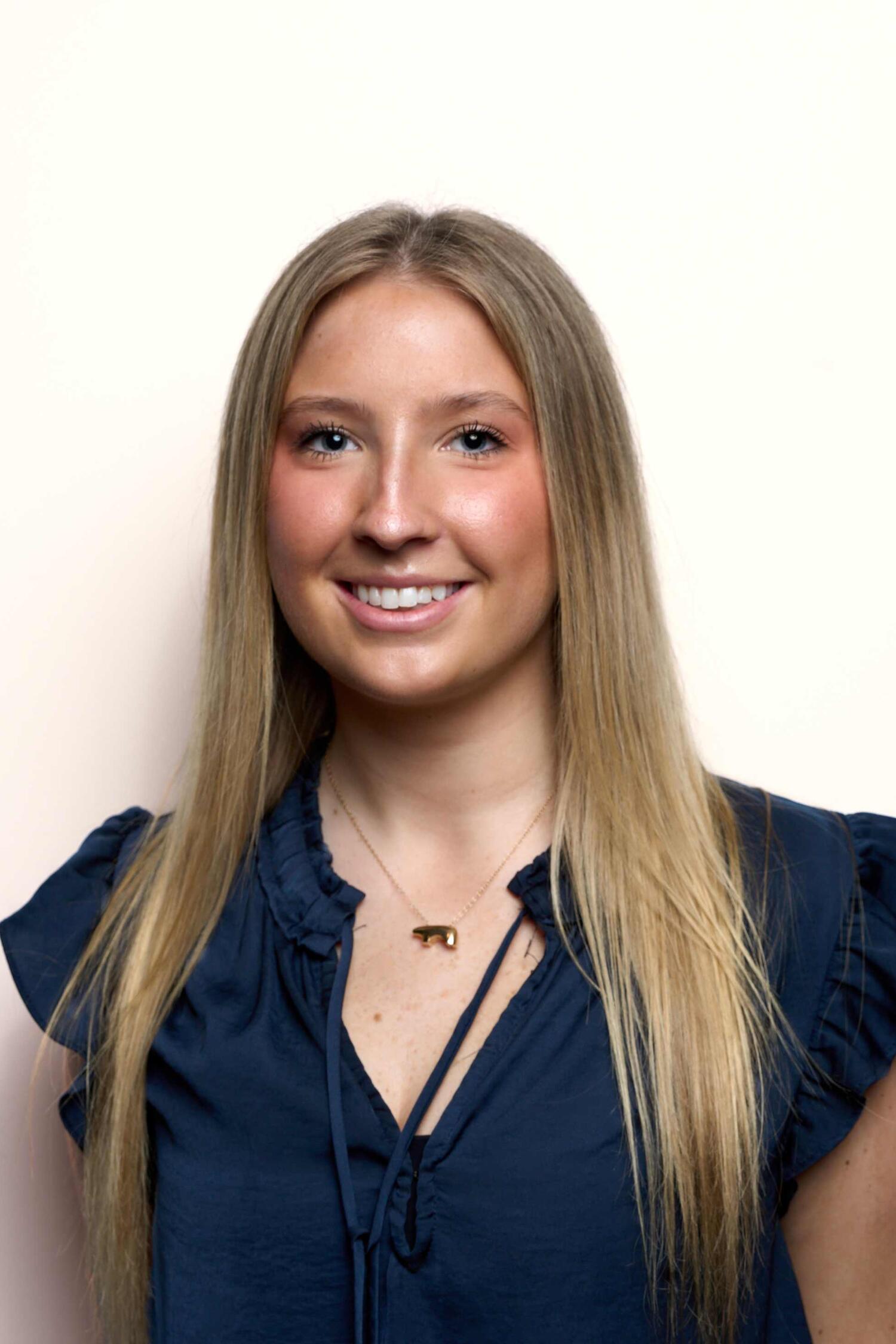
Caroline Best
Moore Family Forty Acres Scholarship
Forty Acres Scholars Class of 2030
Hometown
Chevy Chase, Maryland
High School
Holton-Arms School
The day I was diagnosed with a life-altering, chronic illness didn’t begin in a hospital; it began at home with a perfectly planned outfit. That morning, I woke up ready to dress in the clothes I had laid out the night before: an outfit chosen with the kind of care only a fourth-grade fashionista could deliver. But when I woke up, my right leg wouldn’t move. There was no pain; it simply went on strike. Eventually, I managed to drag myself and my unmoving leg out of bed.
“Mom, I can’t go to school. Something’s wrong.” Eight words were all I could muster, but they carried the weight of my confusion, fear, and sinking intuition that something had permanently shifted in my body overnight.
Within minutes, we were on our way to the emergency room. My perfectly chosen outfit left on the floor, replaced with a hospital gown and fluorescent lights humming relentlessly, making me feel even more vulnerable.
After an entire day of scans at Georgetown Hospital, I was discharged with a diagnosis I didn’t understand: Juvenile Idiopathic Arthritis. I didn’t know what the words meant or how they would change my life. When I turned to my mom, her face told me everything I needed to know. Shock, grief, and fear clouded her usually steady eyes as she processed what a life with a chronic illness meant for me.
That night marked a significant shift, both physically and emotionally. Every corner of my daily life changed. First, I had to start taking medications. For two years, I swallowed two pills every night at 7 p.m., which worked - until it didn’t. As my condition became more chronic, I had to adjust medicines and face one of my biggest fears: needles.
At first, my mom gave me the injections, but eventually I took over, counting down from three as I pressed the injection into my thigh. It wasn’t just about managing the pain; it was about learning how to care for myself in ways my peers never had to imagine. While my friends decorated notebooks, I bedazzled pill organizers and scheduled infusions.
As I learned to navigate this life with discipline and courage, I also began to self-advocate - in doctors' offices, at school, and among friends who didn’t understand my need to rest during bad flare-ups. My voice became my strongest muscle; eventually, it found a purpose at the National Center for Children and Families (NCCF). There, I’ve spent the past few years supporting children in transitional housing, many of whom face not only homelessness but also trauma, instability, and learning differences.
The kids at NCCF do not have the support I have been fortunate to have. They lack a medical team and formal accommodations. When their emotions run high, and they often do, I teach them breathing exercises I use myself. Sometimes we color. Sometimes we dance. Sometimes we just remove ourselves to another space until the moment passes.
Working with these children at NCCF has taught me that advocacy can take many forms: crayons, patience, and stubborn optimism - the kind I learned while sitting on my bed with a needle in one hand and courage in the other.
Despite now being diagnosed with Rheumatoid Arthritis, I don’t consider myself someone who suffers. My diagnosis is a defining part of my resilience - teaching me to shift my mindset, to choose optimism when it’s not easy, and to persevere through uncertainty. I’ve learned to advocate for myself: in doctors’ offices when deciding on treatments, at school or with friends when physical challenges arise, and in everyday life, using my voice to bridge gaps and spark change.
Major
Communication and Leadership
Other Academic Interests
Advertising, Marketing, Sports Media, and Communicating for Development and Philanthropy
Extracurricular Activities
Served as a Sports Media and Communication Intern with the University of Maryland Athletic Department; recognized as a National Volunteer and Intern for the National Center for Children and Families (NCCF); received the Hall of Fame Award from Blood Cancer United; and earned a Certificate in Entrepreneurship from the University of Pennsylvania for postpartum advocacy work in my community.
What drew you to the Forty Acres Scholars Program?
I was drawn to the Forty Acres Scholars Program because of the opportunity to learn alongside students with different experiences, perspectives, and passions. My experiences with advocacy have shown me the impact that thoughtful communication and leadership can have, and I want to be part of a community that challenges me to grow, think differently, and become a stronger leader. Forty Acres also gives me the confidence to pursue my goals knowing that I have a community behind me that will support, encourage, and challenge me along the way. Beyond the support, the program opens doors to opportunities, connections, and experiences that I may not have otherwise had access to. I am excited to build a network of people who can introduce me to new perspectives, opportunities, and pathways that will help me expand my aspirations and turn them into reality.